
 RSS Feed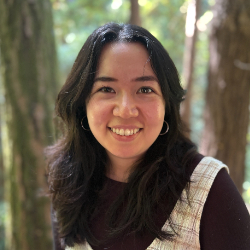
The University Library is thrilled to introduce Anna Ijiri Oehlkers as the recipient of the 2025-2026 Fellowship in the Center for Archival Research and Training (CART).
Anna is going into her third year as a PhD student in Visual Studies, where her main research area surrounds world's fairs and expositions. Prior to her graduate work, she worked at several museums, including the Peabody Essex Museum, the MIT Museum, and the Metropolitan Museum of Art.
When she begins her fellowship in Fall 2025, Anna will be immersed in Special Collections & Archives for a full academic year, devoting 20 hours per week to archives and public projects in the library. Anna will organize and describe the records of Cowell College, the first residential college at UCSC, which is celebrating its 60th anniversary this year. After making the collection available for research, she'll curate an exhibition that will open in the McHenry Third Floor Gallery in Spring 2026, and plan a program for the campus community.
Stay tuned for more information on Anna’s work throughout the year!
Meet Anna
Tell us a little bit about your background. How did you decide to come to UCSC for your graduate studies?
Before joining UCSC, I was working in digital media for museums and had the chance to contribute to a wide range of exhibition and collections projects. At the same time, I was continuing an interest in world’s fairs and international exhibitions, and had become fascinated by the archives and materials left in the aftermath of those temporary mega-events. In particular, I was curious about how world expositions are preserved through the personal recordings and memories of visitors and participants—people who, in documenting the event, often complicate the official record.
Ultimately, I decided to keep pursuing that line of questioning and joined HAVC’s (History of Art and Visual Culture) Visual Studies program to work with my advisor, Stacy Kamehiro. As I enter my third year, I’m focused on building a dissertation project that explores alternative perspectives, narratives, and materials related to international fairs and expositions. I’ve been especially interested in case studies involving Japan’s government pavilions, their experimental screen and immersive media, and the role of Japanese Americans at U.S. expositions. UCSC has been the best possible setting for this research and has brought me together with some incredible peers and instructors.
You’ve done some really cool work with digital humanities and public engagement in museums, could you talk more about that? What are some of the most interesting aspects you’ve found so far in these areas of work?
Working with digital media in museums, we’re constantly thinking about media specificity and how different media formats are creating different encounters with collection objects, exhibitions, people, stories, etc. There’s the physical experience, which can sometimes involve touch or close-looking and varying layers of interpretation, but public engagement can be a completely different experience when mediated in the digital realm. Video projects let you bring in voices, visuals, and behind-the-scenes insights that might not fit in the gallery. Through editing and archival materials, objects can be animated in new ways. While social media has its challenges, it offers a chance to reach people where they already are and to interact with those who may never set foot in the museum.
How did you hear about CART, and what attracted you to the fellowship?
I was introduced to the CART program during my first tour of UCSC, when we visited Special Collections and Archives. Since then, I’ve followed the wonderful work done by CART fellows and have hoped to get involved myself. After graduating, I also hope to work in archives or collections, and this program offers an ideal combination of hands-on experience and engagement with archival theory. I’m especially excited to contribute to projects that make key parts of the collection (like the Cowell College Records) more accessible and usable for everyone.
What are some of your favorite things to do outside of your studies and work?
My time outside of studies and work usually involves some combination of crocheting, bouldering, and watching Survivor. I also try to see every musical performed within a 75-mile radius.
Before coming to UCSC, I had only ever lived on the East Coast. Sorry to say, but nothing compares to the redwoods and ocean views here. I try to visit a large body of water at least twice a week and like to walk around Arana Gulch to watch the cows.
The Elisabeth Remak-Honnef Center for Archival Research and Training (CART), established in 2014 at the UC Santa Cruz University Library, has trained dozens of graduate students in archives and exhibition work since its inception. In cultivating impactful learning experiences, CART develops students' archival research skills to support their career success, and increases access to unique Library resources for all.
Learn more about CART on our website.
 1156 High Street


